
Name: Ms. Sarah Andrews
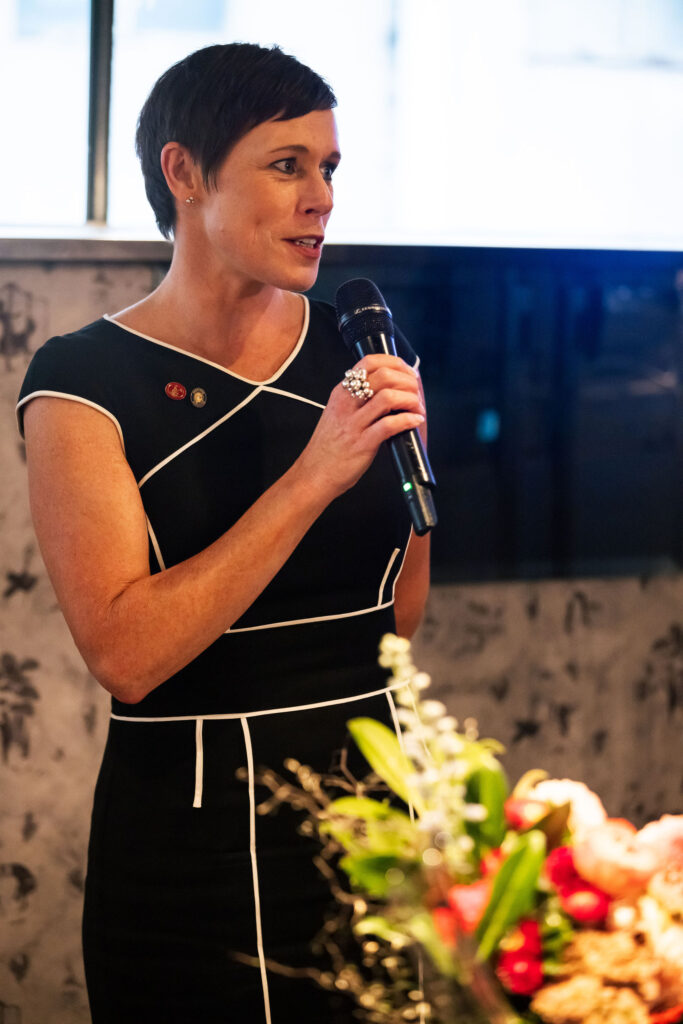
Nationality: Australian
Seladoor Wines: click
BA (Hons) / BSc
DipWSET (Honours), WSET L3 Awards in Spirits, L2 Award in Beer
WSET ETP Certified (Wine, Spirits, Beer)
CMS Certified
Profession:
Selador Wines – Consultant / Sommelier / Educator / Public Speaker
Former WSET Head APAC
Former President of Sommeliers Australia
Former ASI Diversity & Inclusivity
Please tell us a little bit about your first encounter with wine & the wine industry. Did you have any particular mentors?
I grew up in regional Victoria, Australia, on a property with a vineyard, growing, not making wine. From a young age, a small glass of wine at the family dinner on Saturday night gave me a slight curiosity about wine until I finished University in Melbourne and headed overseas to explore the world. I fell in love with the wine and food scene in Europe, and with that travel that became the conduit, and the rest is history. My greatest mentor, still in my life, a wonderful business person whose passion for wine and food showed me a way to make this my profession in so many varied ways.
Spanning 20+ years, I have been actively involved with Sommeliers Australia (former President), ASI (Diversity & Inclusivity Committee) and WSET (former Head APAC, Certified Educator – Wine, Spirits, Beer), which has stretched me above and beyond the traditional role of a professional Sommelier, but at the same time kept me connected to such professionals. Opportunities now span far beyond the restaurant floor, which is exciting and enticing for those entering the industry.
What specific traits or skills should a Sommelier possess for professional performance, and is there any person with those qualities you especially admire within the wine industry?
Of the utmost importance is humility, followed by strong communication skills, leading with the ability to listen. The best in our industry can read a person or a table quickly and adapt accordingly, knowing when to dial up or dial down. Bringing one’s personality to the table is a fine art. Knowledge and recommendations are expected. Eye contact, a genuine smile and storytelling can go a long way to making a good dining experience simply outstanding!
What would be your advice to a young Sommelier(e)? How to find a good position at home or abroad? Any further tips?
If this is the career you desire, study hard and keep reading. Both WSET and CMS provide structured qualifications in theory, tasting for the latter, and service. Join your local Sommelier Association and any associated tasting groups. Identify someone you admire, or aspire to emulate and find yourself a mentor and ask, what is the worst that can happen? Take note when you dine out to define the venue you wish to work in. Make the most of trade events to network. And don’t be a stranger to beverage production: visit wineries, distilleries and breweries, as there is so much generosity on offer if you make the effort!
When a customer asks for advice on selecting wine, what, in your opinion, would be the best approach?
Reassure with a smile, fact find quickly (likes, dislikes, occasion, style of beverage), and gently define a budget if not guided on this. From there I like to provide options so the guest is empowered to make a selection, unless I have been asked to do this. If I feel it is required, I identify the offering(s) on the wine list for clarity of origin, vintage, style and price. Within some dining parameters a small taste is possible but if not, I take on board comments on the offering I have made and then move forward. I am a big believer in getting customers settled quickly and with water and a beverage, so often lean into ‘by the glass’ to then allow more time in selecting ‘by the bottle.’
What is your philosophy about glasses? Are you working with well-known brands, or are you considering new brands as well? How do you decide?
Glassware is imperative to the consumer’s experience. As Sommeliers we have a duty of care to shadow wine from bottle to glass for the very best experience. I expect this for myself, so I must do the same for those I am interacting with, whether this be through Sommeliers Australia in training or master-classes, WSET in education or during a dining experience with a customer. I pivot between both RIEDEL and PLUMM for different reasons, and have both for personal use. RIEDEL are the glassware sponsor for Sommeliers Australia, so we have regular use for masterclasses and events. PLUMM has been my glassware of choice for WSET education and training.
Just as well my warehouse has room for many boxes of glasses as well as wine!
What advice would you give people on pairing wine with food?
Go with what you know and love, and don’t feel you have to be guided by rules, food and wine is about pleasure after all. Most food and wine combinations are generally okay, with the sauces and accompaniments that can be the challenge. If you are looking for broad guidelines, I tend to reference the following:
Should a Sommelier:ère taste the guest’s wine?
Today, there are very few venues in which this is required, given advances in science and technology in winemaking, closures and storage, etc. In addition, many wine programs are set up whereby checks are done regularly and before the wine gets to the table. Strong by the glass program,s which supports Coravin, also enables checks on wine. In asking for a guest’s permission, you are showing commitment to quality, taking the guest on a journey and mitigating push back if this is done and the bottle is presented as ‘in good condition.’
What are the key ingredients for creating a wine list for a restaurant, and what is your opinion on pricing wine in restaurants? Do you have tips for determining markups?
Balance – strong and diverse wine by the glass – balance – profitability for the business – pleasure for the consumer!
A fixed formula based on either margin or markup at both ends of the list misses the mark for everyone, both business and consumer. If I put my Sommelier hat on, I want ‘by the glass’ to turn over quickly with a lower $$ margin, but the bottles are moving and paying their way. Few venues have the buffer of budget or space to push for high margin, and often, when they do, stock turnover is slow and puts pressure on everyone. If I pivot to a consumer, nothing frustrates me more than a poorly executed and expensive ‘wine by the glass’ list where there is nothing I want to choose or spend, and the offering is imbalanced. Admittedly, I may know the cost price and therefore the mark-up/margin, but at the end of the da,y I am in the venue to enjoy a glass of wine and want to order something.
Harmony at the end of the day is what I want to see – with snacks, food menu, degustation, etc., and appropriate beverage offering. I am privileged to be one of the finalist judges for Qantas Best Wine List of the Year Awards, Australia, pouring over 6 – 7 lists, assessing their presentation, by the glass, sparkling, aperitif and digestif, other beverage categories, food offering, and degustation menu if applicable. It is a huge undertaking, however, the excitement gained from seeing the balance and attention to detail – the harmony I mentioned earlier – big sigh and huge grin when it’s achieved!
How do you manage to stay on top of the changes in the wine industry?
Read, network, and stay closely connected to the industry on the production side. Be an active member your Sommelier Association, which will foster strong industry connections. As we all know, wine is unique and no two vintages are the same, so keeping up to date is imperative for the correct wine selections for your business, wine list and ultimately your guests. One of the benefits of finding time to be a wine judge is that it enables ‘deep dives’ into particular varieties and categories, and a huge benefit is the ability to network with producers.
How would a new vineyard get its wine noticed, and what is the best way for producers to improve their chances of being listed?
Wine is such an established market all over the world, it has become harder for a new producer to step into this space without clear definition of quality, balance, place and position in the market. They will have nothing unique except their ‘story,’ and the relationships they build. As a former importer, distributor and exporter, with the last 15 years consulting in the wine, spirits and NoLo space I have 5 top recommendations:
If you were a wine, which variety would you be, and why?
Chenin Blanc – such a versatile variety with so many personalities that transcend reason, season and occasion!
Which top 3 types of wine (your faves would we find in your home wine collection, and what’s your desert island wine?
The noble Riesling would survive chilled on the shores of an island and accompany freshly caught seafood!
Chardonnay that exhibits tension from beginning to end, and Cabernet Sauvignon through to maturity.
Any interesting suggestions about magazines or online platforms?
My go-to references include:
Decanter
Wine Spectator
ASI Magazine
Jancisronbinson.com
The Australian & New Zealand Grapegrower & Winemaker
Best regards,
Sarah
⚜️Why Working Abroad as a Sommelier:ère Could Be a Game Changer: click
⚜️Looking to hire a professional Sommelier:ères? Zeitgeist connects top talent with premium hospitality employers worldwide. Post a job
⚜️Looking for the perfect wine list? Feel free to go to the link
*****

Dominik Kozlik e.U.
78/12 Gruberstr.
4020 Linz, Austria