Name: Mr. Paul-Nicusor Alexa
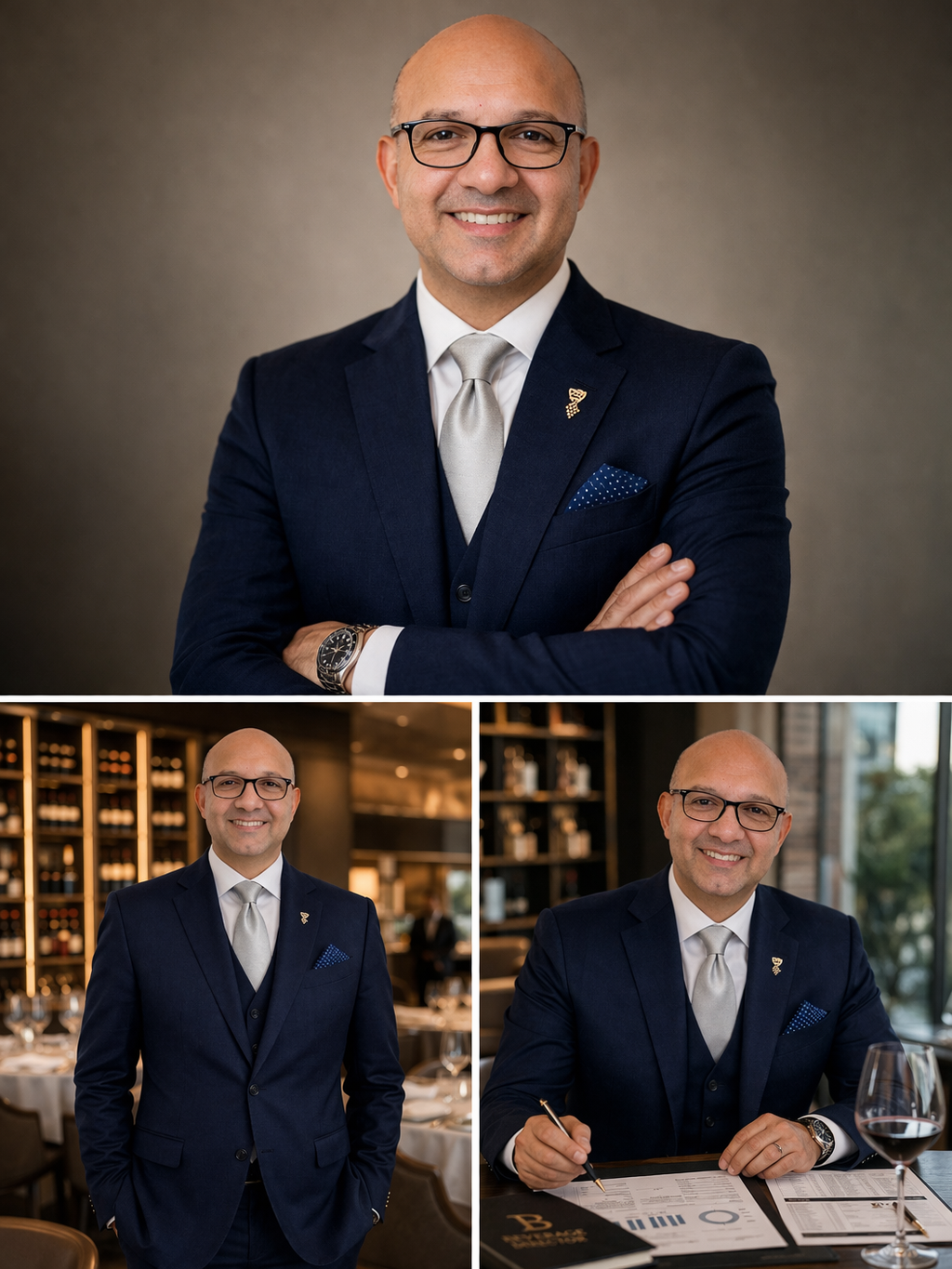
Nationality: Romanian/Italian
The Alexa F&B Architecture: click
For Paul Alexa, a Food & Beverage professional with a strong operational and financial focus, the role of the sommelier goes far beyond recommendation. - It becomes a matter of structure, decision-making, and performance design.
Please tell us a little bit about your first encounter with wine & the wine industry. Did you have any particular mentors?
My first encounter with wine wasn't just about tasting - it was about understanding its role within the dining experience. Working in high-volume hospitality environments, I quickly realised that wine is not only cultural, but also operational and financial. Over time, my perspective evolved: from learning wine to understanding how wine performs within a business.
What specific traits or skills should a Sommelier possess for professional performance, and is there any person with those qualities you especially admire within the wine industry?
Today, knowledge alone is not enough.
A great sommelier needs:
Because wine is not just about what you know - it is about how effectively you translate that knowledge into guest value and business results.
What would be your advice to a young Sommelier? How to find a good position at home or abroad? Any further tips?
Focus less on memorising labels and more on understanding context.
Learn:
A great sommelier does not just recommend wine - they influence performance.
When a customer asks for advice on selecting wine, what, in your opinion, would be the best approach?
I focus on simplifying the decision. The goal is not to impress - but to guide. Understanding the guest, narrowing the choices, and building trust are key because confidence in the decision creates a better experience - and often a higher-value one.
What is your philosophy about glasses? Are you working with well-known brands, or are you considering new brands as well? How do you decide?
Glassware should elevate the experience without complicating operations.
It is always a balance between:
Luxury is not excess - it is precision.
What advice would you give people on pairing wine with food?
Pairing should be intuitive, not rigid. Balance and guest preference matter more than rules. In many cases, the best pairing is not the most technical one - but the one the guest truly enjoys.
Should a Sommelier:ère taste the guest’s wine?
Only when necessary. The role is to ensure quality and service - not to take ownership of the guest's moment. Discretion is part of professionalism.
What are the key ingredients for creating a wine list for a restaurant, and what is your opinion on pricing wine in restaurants? Do you have tips for determining markups?
A wine list is not a collection - it is a structured revenue system.
It should be:
Most importantly, it must support margin generation, not just variety. I do not believe in fixed markups - I believe in margin strategy.
Different tiers serve different purposes:
The key metric is not markup - it is contribution per cover.
How do you manage to stay on top of the changes in the wine industry?
Through a mix of tasting, industry insight, and real-world observation. But the most important data comes from the floor: guest behaviour and sales patterns. Because trends are interesting - performance is measurable.
How would a new vineyard get its wine noticed, and what is the best way for producers to improve their chances of being listed?
Visibility alone is not enough.
From an operator's perspective, a wine must:
Restaurants do not just buy wine - they integrate solutions into a system.
If you were a wine, which variety would you be, and why?
Nebbiolo, Structured, evolving, and sometimes misunderstood at first - but built for depth and long-term development.
Like performance in hospitality, it is not immediate - it is designed over time.
Which top 3 types of wine (your faves would we find in your home wine collection, and what’s your desert island wine?
Desert island wine: Champagne. Because it adapts to every moment - celebration, reflection, or simply time itself.
Any interesting suggestions about magazines or online platforms?
I follow a mix of traditional and modern sources, including Decanter, Wine Business Monthly, and GuildSomm. But more importantly, I trust operational data and guest response. Because the most honest feedback does not come from publications - it comes from performance.
What truly defines the evolution of the sommelier role today is not just knowledge or recommendation, but the ability to translate wine into performance. While guest experience remains central, the real shift happens when wine is managed as part of a broader business strategy.
Because ultimately:
are not technical elements - they are management decisions. And that is where the role moves from specialist to business leader.
Closing Statement
At the end of the day, wine is not just about what you serve - it is about how it performs within the business.
Measure. Control. Profit.
From Wine to Performance
Most people see wine as a product. I see it as a system.
A system that influences:
In this interview with Zeitgeist Sommelier Jobs, I share my perspective on how the role of the Sommelier is evolving - from recommendation to performance.
Best regards,
Paul
⚜️Why Working Abroad as a Sommelier:ère Could Be a Game Changer: click
⚜️Looking to hire a professional Sommelier:ères? Zeitgeist connects top talent with premium hospitality employers worldwide. Post a job
⚜️Looking for the perfect wine list? Feel free to go to the link
*****

Dominik Kozlik e.U.
78/12 Gruberstr.
4020 Linz, Austria