Name: Ms. Laurie Cooper
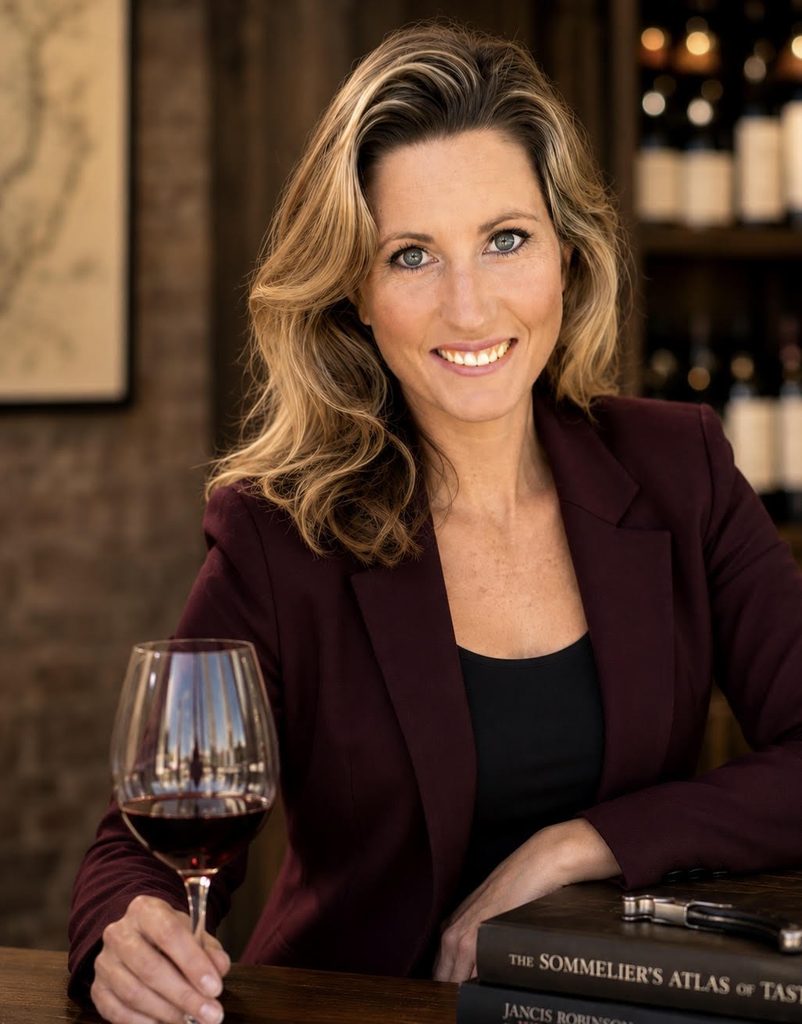
Nationality: South Africa
DipWSET
Chairperson - Sommeliers Association of South Africa
Runner up - Best Sommelier of South Africa 2023 & 2025
Winner - Moet et Chandon Best Young Sommelier 2019
Founder & Owner - KZN School of Wine
SASA Level 2 Certified Sommelier
Please tell us a little bit about your first encounter with wine & the wine industry. Did you have any particular mentors?
I was 13 when my father planted a vineyard and I can’t say that I paid much attention to it nor remember those first years of living on a wine estate but somehow the seed must have been planted subconsciously. I was working in London in a corporate job when I first started my wine studies and fell in love instantly. I was looking for a creative outlet and I found a passion and a career. I soon moved back to South Africa to join the family business and my greatest mentor during this time was my Father who taught me everything he knew about viticulture & Winemaking. Not long after opening my own wine school, I was introduced to Jean-Vincent Ridon who became a colleague and mentor and ultimately steered me into the direction of becoming a certified Sommelier.
What specific traits or skills should a Sommelier possess for professional performance, and is there any person with those qualities you especially admire within the wine industry?
A great Sommelier needs far more than an exceptional palate or an encyclopaedic knowledge of wine. Whilst those things are important, a great Sommelier is ultimately about creating an experience.
I think the most important qualities are curiosity, discipline and emotional intelligence. You need the curiosity to keep learning because wine is constantly evolving and one will never know it all and the discipline to prepare and perform under pressure.
You also need to be able to communicate and read your clients and the situation. A Sommelier can have all the technical knowledge in the world, but if you can't make wine interesting, approachable and relevant to the person sitting across from you, you've missed the point.
What would be your advice to a young Sommelier? How to find a good position at home or abroad? Any further tips?
My advice would be very simple: study, study, study.
Qualifications do matter. They give you a foundation, credibility and, particularly when you want to work abroad, something that an employer can recognise regardless of where you come from.
Enter regional and national competitions. Competition is one of the best ways to discover where your weaknesses are. It forces you to perform under pressure, exposes the gaps in your knowledge and teaches you to think quickly.
Put in the hours. There is no shortcut to becoming exceptional at this profession. Open bottle after bottle after bottle. Practice until things become second nature. You shouldn't be thinking about how to open a bottle or identify a classic grape variety when you're under pressure — those things need to become instinctive.
If you want to find a position at home or abroad, I would also say make yourself visible. Go to tastings, attend industry events, introduce yourself to people, build relationships with winemakers, Sommeliers, importers and restaurants. Don't wait for a job advertisement. Sometimes the best opportunities come because someone remembers meeting you and remembers your attitude.
Finally, be humble, responsible and be useful. Wine is a very small industry, and people remember how you conduct yourself. Your reputation will travel much further than your CV.
When a customer asks for advice on selecting wine, what, in your opinion, would be the best approach?
I think the best approach is to find out what the customer likes without making them feel like they are being interrogated.
I would start by asking whether there are any wines on the list that have caught their eye. That gives the customer something tangible to relate to, rather than putting them on the spot and asking them to describe their taste from scratch. It can also give you a good indication of their taste preferences and price range.
From there, I would ask a couple of simple, natural questions — perhaps whether they prefer something lighter or fuller-bodied, fruit-driven or more savoury — but I wouldn't bombard them with questions. The customer shouldn't feel intimidated by the process.
Food is obviously another important consideration. What they are eating can completely change the recommendation, and sometimes the best wine isn't necessarily the one they would have chosen for themselves.
Ultimately, I think the role of the Sommelier is to listen, interpret and make the customer feel confident in their choice. We shouldn't be trying to demonstrate how much we know; we should be using what we know to make their experience better.
What is your philosophy about glasses? Are you working with well-known brands, or are you considering new brands as well? How do you decide?
I love a great glass. Unfortunately, in our market, high end premium brands aren’t always feasible. We have a range of glasses to suit the occasion, exclusivity and event.
What advice would you give people on pairing wine with food?
My biggest piece of advice would be to think of wine as another ingredient on the plate.
Start by looking at the richness and intensity of both the food and the wine. You want them to be in balance.
I also like to think about the actual flavours in the wine. If you can imagine incorporating those flavours or ingredients into the dish, there is a good chance the pairing will work. If a wine has beautiful citrus character, for example, think about where citrus might appear in the food. If it has earthy, savoury or herbal notes, look for those elements in the dish.
Should a Sommelier taste the guest’s wine?
I don't think a Sommelier needs to taste every bottle that is opened at the table. It should really come down to the wine, its history and the circumstances.
If it is a wine that the restaurant uses regularly, from a reliable producer, recent vintage and consistently arrives in good condition, I don't think there is necessarily a reason to taste it every time.
However, if it is an older vintage, a particularly expensive or delicate wine, or a bottle from a producer that has had issues with cork taint or bottle variation in the past, then absolutely, I would taste it.
Ultimately, the responsibility of the Sommelier is to make sure the wine is in good condition before it is served to the guest. I think the approach should be professional judgement rather than simply following a rule.
What are the key ingredients for creating a wine list for a restaurant, and what is your opinion on pricing wine in restaurants? Do you have tips for determining markups?
I don't believe a great wine list needs to have 1,000 wines on it. I would much rather have a smaller, well-curated list where the Sommelier actually knows the wines than a huge list whereby the Sommelier cannot confidently guide the customer.
For me, the key is diversity in manageable sizes. You want enough variety to cater for different tastes, cuisines and budgets, while still having a clear identity and purpose to the list. It should also complement the food and the style of the restaurant rather than simply being a collection of wines that someone happens to like.
I also think good wines by the glass have become increasingly important in todays market. We have found customers are drinking less at higher quality levels. They also allow customers to explore without committing to a whole bottle, and they are particularly important when dining alone or when a table has different preferences.
When it comes to pricing, I don't believe in applying exactly the same mark-up across every wine. I prefer a sliding scale. A very inexpensive bottle can carry a higher percentage mark-up, while more expensive wines should generally have a lower percentage mark-up. Otherwise, the price of premium wines can become prohibitive and discourage customers from trading up.
You also need to consider the realities of the restaurant — overheads, storage, wastage, service and the cost of holding stock — but I think the ultimate goal should be to create a list where the customer feels there is value at every price point.
How do you manage to stay on top of the changes in the wine industry?
I think you have to accept that you never really stop learning in wine. The industry changes constantly, and if you think you know everything, you're probably already falling behind.
I stay current through a combination of formal education, tasting, online publications and, most importantly, being involved in the industry. I taste as much as I can, read online, speak to winemakers and producers, attend tastings and industry events, and make a point of exploring regions and varieties that I may not know well.
Being Chairperson and involved with the South Africa’s Sommelier’s Association has also kept me very connected to what is happening within the profession, both locally and internationally with Sommeliers dealing with the consumer changes first hand.
How would a new vineyard get its wine noticed, and what is the best way for producers to improve their chances of being listed?
I think the first thing a new vineyard needs to understand is that making a good wine isn't enough anymore. There are thousands of good wines in the market. You need to give people a reason to remember yours.
For a new producer, I would focus on a clear authentic identity and a compelling story. What makes you different? What is interesting about the place, the people or the wine? That story needs to be communicated consistently.
Then, get the wine into the hands of the right people. Don't try to be everywhere immediately. Identify the Sommeliers, wine shops, restaurants and influencers who are genuinely interested in what you're doing, align with your ethos and build relationships with them. Tastings, visits and personal relationships still matter enormously in this industry.
For producers wanting to get listed in restaurants, my biggest advice is: make the Sommelier's job easy. Have a wine that fills a genuine gap on their list, a unique selling point, have reliable supply and pricing, and be able to clearly explain what makes the wine distinctive.
Ultimately, don't walk into a restaurant simply asking, "Will you list my wine?" Walk in knowing the restaurant, understanding its food and wine programme, and being able to explain why your wine belongs there.
The best producers don't just sell wine. They build relationships and create advocates for the brand.
If you were a wine, which variety would you be, and why?
Grenache – happiest in the sun and warmth. Can range from intense and complex to light and playful.
Which top 3 types of wine (your faves would we find in your home wine collection, and what’s your desert island wine?
I have a particular weakness for bubbles — Champagne and MCC are wines I can drink for almost any occasion.
I have always loved Northern Rhône Syrah and I have to include South African Chardonnay. I think there are some exceptionally fine examples to be found in South Arica at the moment.
As for my desert island wine... Champagne. Without hesitation. If I'm going to be stranded on an island, I may as well make the situation as enjoyable as possible!
Any interesting suggestions about magazines or online platforms?
I think we are incredibly fortunate now because there is so much information available, both locally and internationally.
The usual international big brands are always a great way to stay on top of the news – Decanter, Wine Enthusiast, Wine Spectator.
But I would also encourage young Sommeliers not to rely solely on publications. Follow winemakers, producers and Sommeliers themselves.
GuildSomm has always been great during times of studying.
Social media has become a fantastic way of seeing what is happening in different regions in real time and, importantly, hearing directly from the people making the wine.
There are too many great Instagram pages to comment on.
Thank you
Laurie
⚜️Why Working Abroad as a Sommelier Could Be a Game Changer: click
⚜️Looking to hire a professional Sommelier:ères? Zeitgeist connects top talent with premium hospitality employers worldwide. Post a job
⚜️Looking for the perfect wine list? Feel free to go to the link
*****

Zeitgeist Sommeliers - Premium Niche Sommelier Job Platform