Name: Mr Thierry Lesparre
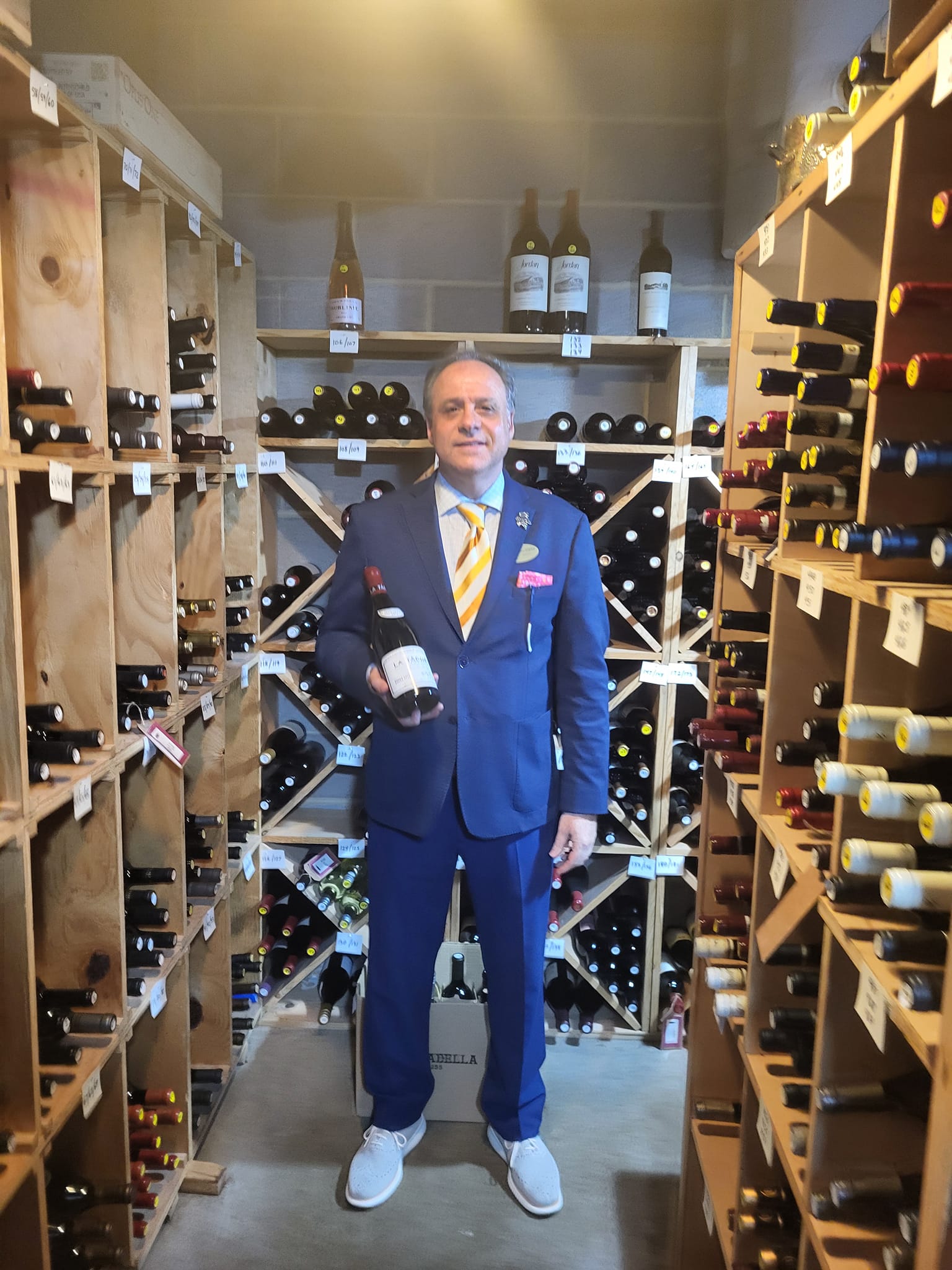
Nationality: French/USA-Oklahoma
Please tell us a little bit about your first encounter with wine & the wine industry. Did you have any particular mentors?
My early years in the world of wine began in London in 1988. Miguel, the head sommelier, was the first influential figure I met; I was only 19 at the time, and it was he who inspired me to embrace this profession within a renowned luxury hotel: The Connaught, in Mayfair
Then, after two years at The Connaught, Miguel said to me, "I know someone in Paris who worked with us in the past; if you like, I can give you his phone number. His name is Olivier Poussier" A few weeks later, I found myself in Paris, working alongside a sommelier who would go on to become a legend in the profession
Between 1990 and 2000, Olivier Poussier won the title of Best Sommelier of France, then of Europe, and in 2000, he was crowned Best Sommelier of the World
It was an exceptional period, spent working at the Michelin-starred restaurant "Le Pavillon Élysée" on the Champs-Élysées, an establishment that, between 1989 and 1991, had previously employed the very first Best Sommelier of the World, Jean-Luc Pouteau
The bar was set very high, but I was seized by passion at that precise moment, and I have never regretted it since. Since 1989, I have continued to work as a sommelier, consultant, and Director of Wine and Spirits Purchasing in the United States of America (1995–2025).
The first wine I tasted and added to my personal cellar in Brittany was the second wine of Léoville Barton "La Réserve" 1982, a Saint-Julien, as well as the Château La Tour Carnet 1985 Haut-Médoc by Bernard Magrez.
What specific traits or skills should a Sommelier possess for professional performance, and is there any person with those qualities you especially admire within the wine industry?
In my view, the modern sommelier is a charismatic and passionate individual, someone who constantly strives to deliver exceptional customer service. He demonstrates discretion while moving with ease and understated elegance; he remains grounded in his fundamentals, yet remains humble and approachable to the clientele. He is sociable, determined, and a tireless worker dedicated to quality at any cost; above all, he loves his craft as well as the teams with whom he collaborates
Finally, the sommelier is someone who trains and guides new generations, encouraging them to pursue this path and to help perpetuate this profession, one that is, admittedly, demanding, yet immensely rewarding
Among my role models in this field, I would cite: Philippe Faure-Brac, Gérard Basset, Serge Dubs, Enrico Bernardo, Olivier Poussier, and my friend Franck Ramage
What would be your advice to a young Sommelier? How to find a good position at home or abroad? Any further tips?
I believe that joining a sommelier association such as the UDSF (Union de la Sommellerie Française) in France, or the ASA (American Sommelier Association) for those residing in the United States (as is my case), constitutes the ideal starting point
Furthermore, for someone of a more reserved nature, I would recommend working in Michelin-starred restaurants or in establishments holding distinctions such as Relais & Châteaux, Forbes, or AAA (in North America), and working closely with the Head Sommelier, who can serve as a mentor to climb the ranks of our profession
Hands-on training is just as important as studying books on oenology
When a customer asks for advice on selecting wine, what, in your opinion, would be the best approach?
Fundamentally, the role of a sommelier is psychological in nature; as such, we must learn to "read" our clients by adopting an approach that fosters dialogue and puts the diner at ease
My initial step would be to invite the client to specify their preferences regarding region, grape variety, and desired wine style, as well as their budget
It is crucial to bear in mind that a sommelier must never pressure a client into making a purchase, but should instead guide them toward a mid-range price point. However, if the client indicates that price is not a constraint, I would then steer them toward a wine of superior pedigree hailing from a more prestigious appellation, chosen specifically to pair with the menu they have selected
Furthermore, in the case of a first-time client, the trust established between the client and the sommelier must be sincere and unequivocal; for a won-over client is one who will return to see us more frequently, bringing along both their family and their business associates
And when you no longer need to open the wine list for that client, you will have succeeded in earning their trust and, at that stage, anything becomes possible
What is your philosophy about glasses? Are you working with well-known brands, or are you considering new brands as well? How do you decide?
Here in the United States, I use a varied range of glassware, such as Spiegelau, Riedel, and Schott Zwiesel, for the restaurants where I have worked, as these glasses demonstrate significant resistance to impact, up to a certain limit
In the past, when I was in Europe, I used Bohemian glass, or the Impitoyables line; however, this proved too fragile for daily use during service within a restaurant setting
It is more difficult to find this specific category of glass here in the United States, glass capable of withstanding the demands of the trade, and particularly the nature of the restaurant environment.
I would like to see glassware designers create one-piece, mouth-blown stemware with no seams; indeed, these glasses tend to break precisely at the junction of the stem or at the base where the bowl meets the stem after frequent washing
What advice would you give people on pairing wine with food?
1) The guiding principle: "Less is more," "Follow & trust your instinct," "Balance, Balance, Balance," "The first impression counts," "Fusion is confusion."
2) Pairing regional cuisine with wines and grape varieties native to that specific terroir creates the perfect match imaginable.
3) Elevate the dish not through extravagance, but through the richness of its aromas and bouquet by selecting fresh, expressive wines from recent vintages, which are generally easier to appreciate.
For a more discerning clientele, prioritise vintages that offer a broader spectrum of complexity, revealed through secondary and tertiary aromas.
Furthermore, depending on the menu's price range, incorporate prestigious wines from renowned appellations, showcasing legendary estates and exceptional vintages
4) Trust your instincts and convictions when crafting the pairings between your dishes and your wine selection.
5) It is essential to harmonize your food and wine pairings with your senses and your intuition as a taster, guiding the palate through a crescendo of intensity that builds throughout the meal: begin with supple, approachable white wines; progress toward aromas and bouquets with greater persistence; and finally, for the most robust dish, intensify the body and complexity by concluding the dinner with richer, smoother wines, or with a digestif to aid digestion.
6) It is important to offer a selection that is balanced for the palate, ensuring that the senses do not become overly fatigued after tasting five, six, or even more wines over the course of the meal
7) The serving temperature of the wines must be optimal, thereby enabling a more diverse range of pairings: initially emphasizing acidity (for wines served chilled), followed by fruity characteristics (at cellar temperature), then by alcohol content for the main course (at room temperature particularly for meat dishes), and finally, by sweetness; indeed, temperature alone can define the transition between courses
8) The use of high-quality tasting glasses—specifically designed to serve wine in portions of 6 to 9 centilitres (2 to 3 ounces) will ensure precise and effortless portioning, with the ultimate goal of enabling you to fully savour the moment and appreciate the quality of the service, without ever feeling shortchanged.
Should a Sommelier:ère taste the guest’s wine?
Personally, I taste the wine in the restaurant to familiarise myself with what is being served at the table, but, above all, to initiate a conversation about that wine with the client
Whether discussing its flaws or its merits and, naturally, we tend to emphasise its positive aspects, I determine whether the wine requires decanting, filtering, or aeration before the purchaser tastes it. This practice also allows me to stay connected with my wines, some of which may have been ageing in the cellar for years
Some establishments do not always permit this practice; yet, in my view, it is essential before table service and presentation to the guests
As sommeliers, we must be proactive and embrace this responsibility; rest assured that our sommelier teams execute this procedure with the utmost discretion and restraint
It is also worth adding that the quality of cork stoppers has improved year after year; furthermore, many countries in the Southern Hemisphere (such as New Zealand and Australia) now utilise screw caps, as well as synthetic or agglomerated stoppers (such as the Stelvin type), or even glass stoppers, such as those used locally in California
What are the key ingredients for creating a wine list for a restaurant, and what is your opinion on pricing wine in restaurants? Do you have tips for determining markups?
1. A clear and legible wine list featuring a selection sourced from specific vineyards, whether regional, national, or international, that is tailored to the restaurant's concept and reputation, and perfectly aligned with the vision of the Executive Chef or the owners
2. Analyse the market positioning of your competitors and ensure that your pricing strategy remains in step with current industry standards
3. Analysing your regular clientele and, more specifically, their consumption habits and preferences is paramount; this analysis will, in part, determine the selection of wines and spirits featured on your list, while the judicious selection of your sommelier team will take care of the rest
4. The quality of a wine list often stems from direct experience gained right in the heart of the vineyards, combined with the ability to effectively translate that experience onto the wine list of a restaurant
Each sommelier brings a unique perspective to the wines that resonate with them personally, and will highlight those selections accordingly.
a. "Wines of the Month."
b. Vertical tastings featuring wines from internationally renowned châteaux or estates.
c. More exclusive or lesser-known wines and appellations that offer educational values, such as indigenous grape varieties or forgotten varietals.
d. Highlighting the families of producers and winemakers who craft the wines of both yesterday and today, it is important to include the full names of these families on the wine list, thereby showcasing their history, whether they are famous or lesser-known. Regarding pricing strategies, I base my approach on the specific category of restaurant in which I operate; pricing strategies for a Michelin-starred establishment will differ considerably from those of a family-friendly neighbourhood restaurant.
It is logical to apply higher markup multipliers in these fine-dining establishments, as they employ highly skilled teams and incur substantial daily operating costs.
Markup multipliers generally range from 300% to 350% for standard restaurants; however, for private clubs (such as country clubs), margins are much more flexible, typically falling between 200% and 250%, given that members of these exclusive clubs have already covered operating expenses through their membership dues.
It is important to note that the survival of many restaurants relies on the profits generated, and particularly those derived from the sale of wines and spirits, which ultimately ensure the establishment's long-term viability
In conclusion, it is crucial to monitor your expenses, track your invoices closely, and automatically adjust the prices on your wine list in response to rising costs; your distributors will not notify you when the prices of these wines have been increased on their invoices; it is therefore incumbent upon you to remain vigilant to preserve your profit margins.
How do you manage to stay on top of the changes in the wine industry?
Personally, I maintain close ties with the estate owners and winemakers whom I host at the restaurant. Every week, I schedule four or five meetings with my importer and distributor partners, organising tastings during these exclusive sessions specifically to discuss new approaches related to climate change, the energy transition, and vineyard drainage. During these exchanges, we discuss market share gains and losses, emerging grape varieties, as well as new vinification and ageing techniques; in short, everything we need to know to facilitate our work with our clients and share with them the latest news from this world of enthusiasts, a sector currently experiencing unprecedented dynamism in the face of a constantly evolving world.
This has proven particularly relevant of late, given the tariffs imposed on our import and distribution companies, which affect them and, consequently, have an impact on our own pricing strategies
I also rely on various media resources, including books, magazines, and podcasts, to keep myself informed of current changes and those looming on the horizon
Furthermore, I organise wine dinners, during which I invite estate owners or winemakers to come and interact with our clientele, a large portion of whom are particularly passionate about our wine list.
Finally, I place great importance on maintaining a privileged relationship with my wine representatives who, as I often say, serve as our "eyes on the ground"; they provide us with invaluable information regarding the wine market, whether at the regional, national, or even international level
How would a new vineyard get its wine noticed, and what is the best way for producers to improve their chances of being listed?
I am convinced that, in the current climate, value for money is a decisive factor in whether a wine is added to our wine lists, whether served by the glass or by the bottle. Price and quality must be perfectly aligned.
These new wineries must demonstrate dynamism and, at times, a flexible pricing strategy tailored to market conditions.
As a sommelier with 30 years of experience, I have established precise criteria regarding price, reputation, and even geographic origin. These criteria enable me to determine whether it is appropriate to welcome these new wines and wineries, or, conversely, to decline them.
The winery’s story must pique our curiosity and prompt us to consider its place on our wine list; furthermore, the specialised press must provide us with arguments compelling enough to justify purchasing the wine.
Ultimately, the tasting itself remains the overriding factor that determines whether a wine is acquired for our program
If you were a wine, which variety would you be, and why?
Without hesitation, I would be a great Pinot Noir, whether from Burgundy or the famous Willamette Valley in Oregon, or perhaps even a Californian Pinot Noir from appellations such as Sonoma County or the Santa Rita Hills, Santa Lucia Highlands on California’s Central Coast.
— Richebourg from Domaine Henri Jayer (Burgundy, France), or that exceptional Vosne-Romanée "Cros Parentoux" from the same proprietor
— Beaux Frères "Upper Terrace," Willamette Valley, Oregon
— Williams Selyem "Eastside Road Neighbours," Sonoma County, California
Pinot Noir remains an iconic grape variety, offering great palate accessibility: a seductive and refined grape with aromas of raspberry, cherry, and rhubarb.
It pairs beautifully with regional dishes. It is also highly prized as an accompaniment to a wide variety of white meats and sometimes even freshwater fish, served with red wine sauces, and is cherished for its ability to captivate even the most discerning palates.
Nevertheless, the *Grands Crus* and certain *Premiers Crus* produced on prestigious terroirs within renowned appellations constitute a category all their own, characterised by their texture, structure, and incomparable fruitiness, at once supple and tangy. Moreover, in the Côte de Nuits and Côte de Beaune, these vines yield wines endowed with exceptional ageing potential and extraordinary complexity.
For over 30 years, my fondest memories have been intertwined with Pinot Noir, that noble grape variety so highly esteemed by professionals and collectors of rare, fine bottles.
My second-favourite grape variety is the "Old Vine Zinfandel", an old Californian variety that I nonetheless cherish above all others
Having lived in the United States for 30 years, I have had the opportunity to taste some truly magnificent wines
This versatile grape allows for the creation of a wide range of wines, spanning from full-bodied reds, boasting rich wildberry flavours and spicy notes, to the highly popular in the 1970's through the 1990's, White Zinfandel, a refreshing and slightly sweet rosé
With its aromas of blackberry, cherry, plum, pepper, and spice, the "Old Vine Zinfandel" is an essential variety, whether for enthusiasts tending their own vineyards or for winemakers aspiring to produce high-quality wines. Often underestimated, it remains, in my eyes, one of the most complete grape varieties in America, for people who look for quality wine with a fantastic price point
-Ravenswood, "Old Hill Single Vineyard" Zinfandel (Sonoma Valley)
-Storybook Mountain, Estate Reserve Zinfandel (Napa Valley)
-Martinelli Winery Zinfandel "Jackass Vineyard" Russian River Valley (Sonoma County)
-Ridge Vineyards Zinfandel "Lytton Springs" Dry Creek Valley (Sonoma County)
-Turley Wine Cellars Zinfandel "Ueberroth Vineyard" (Paso Robles)
-A. Rafanelli Zinfandel, Dry Creek Valley (Sonoma County)
-Robert Biale Vineyards Zinfandel "Black Chicken" (Napa Valley)
Which top 3 types of wine (your faves would we find in your home wine collection, and what’s your desert island wine?
It is quite difficult to choose, as I have been collecting wines for 30 years, spanning both France and the United States:
-Château Lafite-Rothschild, Pauillac 1995, Bordeaux/France
-Château La Conseillante, Pomerol 1985, Bordeaux/France
-Tenuta Dell'Ornellaia, Bolgheri Superiore 1995, Tuscany/Italy
-Montevetrano di Silvia Imparato, Salento 1982, Campania/Italy
-Barolo, Giacomo Conterno "Monfortino" 2001, Piedmont/Italy
-Penfolds, Grange, South Australia 1996, Australia
-Dominus Estate, Christian Moueix 2002, Napa/USA
-Diamond Creek "Gravelly Meadow" 1996, Napa/USA
-Ben Rye, Zibibbo, Passito di Pantelleria, Donnafugata 2007, Sicily/Italy
-Barbeito Malvasia Single Cask "San Jorge Vineyard" 2009 Madeira/Portugal
I would also place these very high-quality grape varieties, many of which are indigenous, at the same level of preference:
- Altesse (White)
- Arneis (White)
- Assyrtiko (White)
- Chardonnay (White)
- Riesling (White)
- Gewürztraminer (White)
- Sauvignon Blanc (White)
- Petit Manseng (White)
- Müller-Thurgau (White)
- Blaufränkisch (Red)
- Cabernet Franc (Red)
- Cabernet Sauvignon (Red)
- Merlot (Red)
- Nebbiolo (Red)
- Mourvèdre (Red)
- Sagrantino (Red)
- Sangiovese (Red)
- Syrah (Red)
- Tempranillo (Red)
- Touriga Nacional (Red)
Any interesting suggestions about magazines or online platforms?
-Jancis Robinson's Wine Course, a guide to the world of wine
-Oz Clarke's New Wine Atlas
-Hugh Johnson, The Story of the Wine
-Hugh Johnson's Wine Companion, The encyclopedia of wines
-Katherine Cole Foreword by Hugh Johnson, Complete wine selector
-Michael Schuster, Essential Wine Tasting: The Complete Practical Wine Tasting Course
-Clive Coates, The Wine of Burgundy
-Bettane & Desseauve, The World's Greatest Wines
-Wine Wise, The Culinary Institute of America
-International Vintage Magazine
-Decanter Magazine
-La Revue des vins de France
-The Wine Spectator
-Local Wine Events (Online platform)
Regards,
Thierry
⚜️Why Working Abroad as a Sommelier:ère Could Be a Game Changer: click
⚜️Looking to hire a professional Sommelier:ères? Zeitgeist connects top talent with premium hospitality employers worldwide. Post a job
⚜️Looking for the perfect wine list? Feel free to go to the link
*****

Zeitgeist Sommeliers - Premium Niche Sommelier Job Platform